Xander Butler · 25 September 2026
Seasonal Fluctuations in Cloud Resource Allocation After Platform Migrations
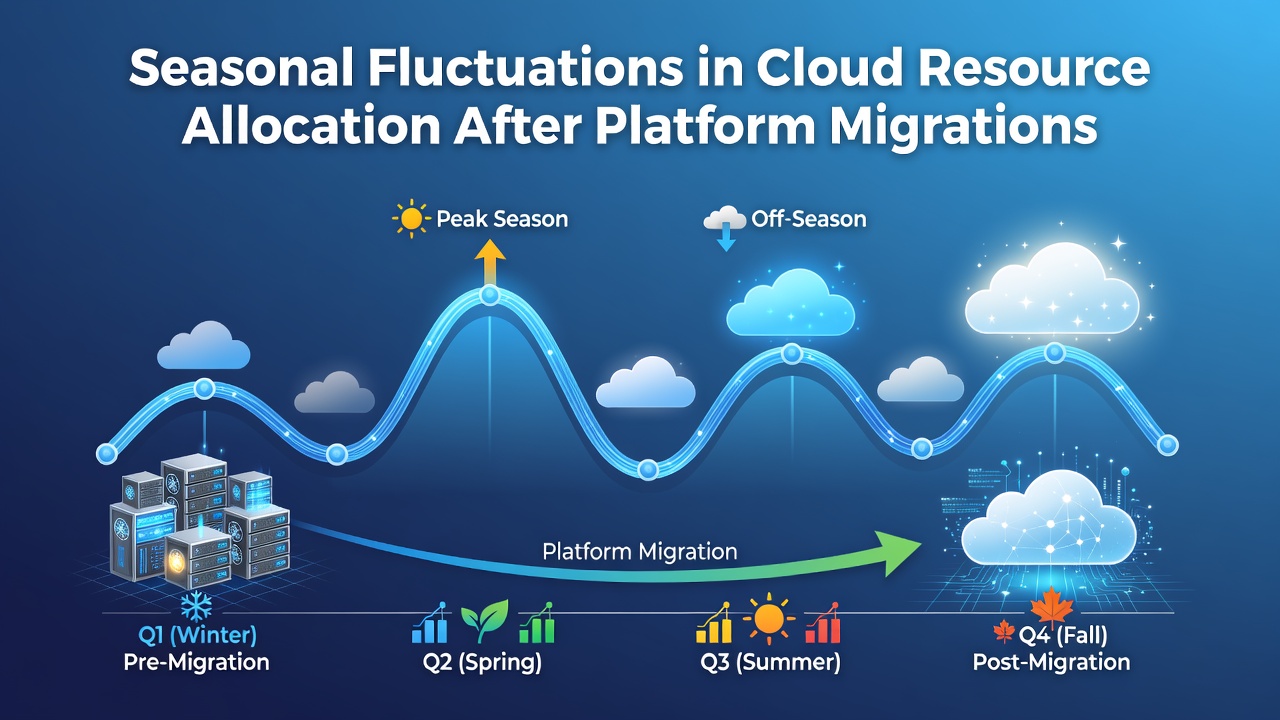
Platform migrations often trigger noticeable shifts in how organizations manage cloud resources and seasonal demand cycles create additional layers of complexity that teams must address through careful monitoring and adjustment protocols. Data centers experience varying loads during peak shopping periods in late fall while summer months bring different usage spikes tied to travel and outdoor activities. Researchers at institutions tracking enterprise infrastructure note that companies completing migrations in the first half of any year frequently encounter resource imbalances when holiday traffic arrives.
Patterns Emerging After Migration Completion
Organizations that finish large-scale cloud transitions report distinct allocation changes as they adapt to new environments and external seasonal factors compound these adjustments. Teams allocate additional compute instances during periods of high user engagement such as back-to-school promotions in August and September yet they scale down during quieter intervals like early spring. Studies from academic groups show that post-migration systems require recalibration because legacy prediction models no longer match the elasticity of modern platforms. One research project conducted across North American enterprises found that resource requests increased by measurable percentages in the months following cutover when seasonal events overlapped with stabilization phases.
Those who oversee infrastructure observe that September 2026 brought particular attention to these dynamics as several major retailers completed migrations ahead of the holiday rush and early indicators pointed to tighter resource pools than anticipated. Monitoring tools revealed that automated scaling policies needed refinement to handle simultaneous regional demand surges without over-provisioning during off-peak windows. The reality is that migration timelines rarely align perfectly with calendar events so planning incorporates buffer capacity from the outset.
Regional and Industry Variations in Resource Demand
Geographic differences influence how seasonal fluctuations manifest after migrations because consumer behavior varies across markets and regulatory environments shape allocation strategies. European organizations often adjust for summer vacation periods that reduce baseline traffic while North American counterparts prepare for winter storms that drive indoor digital activity higher. According to findings published by the National Institute of Standards and Technology cloud migration teams benefit from incorporating location-specific historical data into their forecasting models. Australian research groups have documented similar patterns in retail sectors where end-of-year sales events create predictable spikes once platforms stabilize.
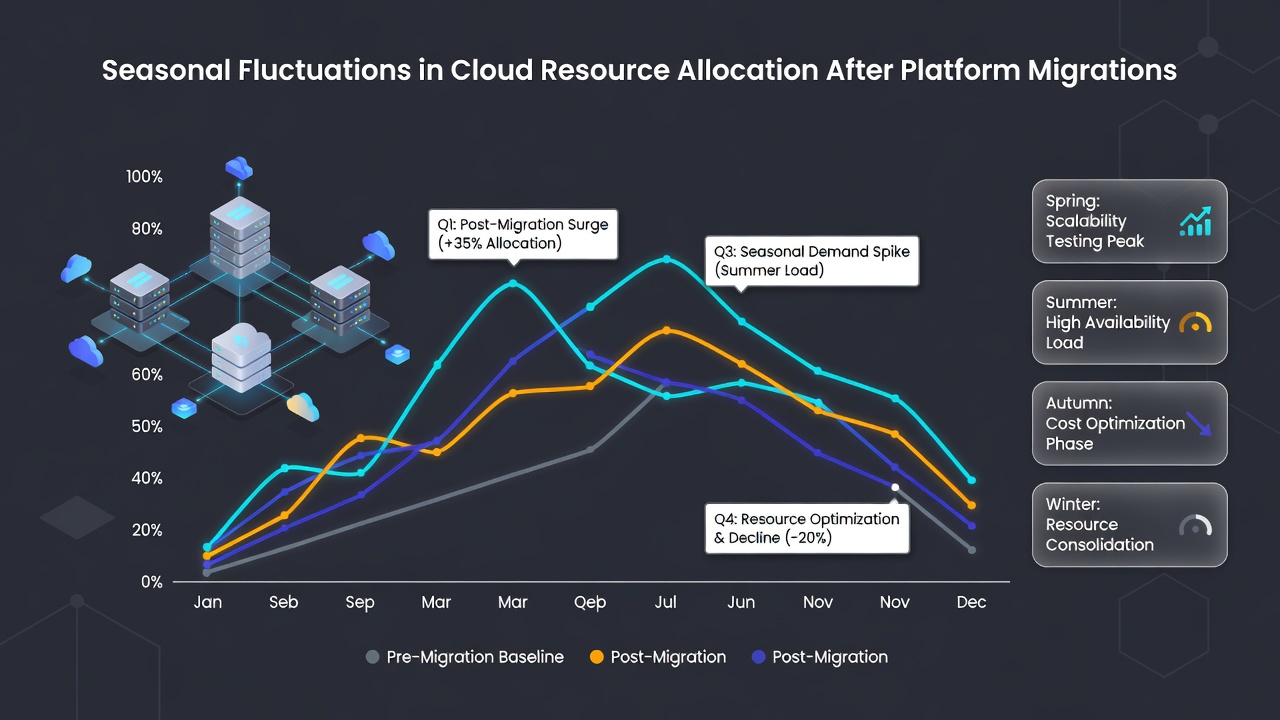
Financial services firms demonstrate another set of behaviors because regulatory reporting deadlines cluster around quarter ends and these deadlines frequently coincide with seasonal shopping peaks. Observers note that companies in this sector maintain higher baseline allocations year-round but they still encounter temporary surges when migrations coincide with fiscal calendar events. Data indicates that industries with steady operations experience milder fluctuations compared to those tied directly to consumer calendars.
Technical Adjustments and Monitoring Practices
Engineers implement dynamic allocation rules that respond to both migration-induced changes and seasonal signals yet these rules require ongoing validation against real usage metrics. Tools that track instance utilization help identify when over-allocation occurs during low-demand months or when under-provisioning risks service degradation during peaks. Reports from industry research bodies emphasize the value of combining historical migration data with external seasonal indicators to refine these policies. Organizations that integrate weather forecasts and retail calendars into their planning see more stable performance after transitions.
Take one logistics company that migrated its tracking systems and subsequently adjusted resource pools to accommodate increased holiday shipping volumes while avoiding excess spend during summer slowdowns. Their approach involved setting tiered thresholds that activated additional capacity only when multiple indicators aligned. Such examples illustrate how post-migration environments reward precise calibration over broad assumptions.
Longer-Term Implications for Planning Cycles
Teams that manage cloud estates after migrations develop multi-year planning frameworks that account for recurring seasonal patterns and these frameworks evolve as new data accumulates. Budget cycles incorporate projections for both expected growth and potential volatility introduced by platform changes. Evidence from longitudinal studies suggests that organizations reviewing allocation data quarterly achieve better alignment between capacity and actual demand. The process involves cross-referencing internal logs with external benchmarks from sources such as reports issued by the European Union Agency for Cybersecurity which highlight infrastructure resilience during variable load periods.
Yet adjustments remain necessary because no single model captures every variable introduced by migrations and seasonal events. Continuous feedback loops allow teams to refine parameters as conditions shift and this iterative method supports sustained efficiency across annual cycles.
Conclusion
Seasonal fluctuations in cloud resource allocation continue to shape operational decisions long after platform migrations conclude and organizations that integrate these factors into their processes maintain more consistent performance. Data from multiple regions and sectors demonstrates that careful monitoring combined with adaptive policies reduces both under-utilization and service risks. As infrastructure environments evolve the ability to anticipate overlapping migration effects and calendar-driven demands becomes a standard component of resource management strategies.